Saturday, 1 June 2013

Lothal - The Port and Business Hub of ancient India

Lothal - The Port and Business Hub of ancient India(cities-RED 4)

Major Population-(Early Natives, Aryans)
Maximum Population-(7500-11000 approx)

  • Such is the story of India........the roots go deep, very deep. Once upon a time,having the most flourishing and prospering trade relations with Mesopotamia(present day Iraq), Egypt, Persia(Iran), some say even African countries.....
  • Today people who live in Gujarat are termed as born businessmen, noted industrialists who were born and bred in gujarat include Jamshedji Tata(founder of India's first private industry, Tata group, born in Navsari, Gujarat), Dhirubhai Ambani(Reliance industries,born in Idhar, Gujarat)
  • It is often quoted "You can take a Gujarati (person who hails from the state of gujarat) out of Gujarat but never business out of a Gujarati"

LETS COME BACK TO LOTHAL


  • Lothal is situated near the village of Saragwala in the Dholka Taluka of Ahmedabad district. It is six kilometres (south-east) of the Lothal-Bhurkhi railway station on the Ahmedabad-Bhavnagar railway line.
  • The city covers an overall area 950 ft x 750 ft approx during its peak.
  • Lothal is supposed to have the earliest dock in the world history. This indicates that India especially Sindh province of pre-indepent India was always indulged in business.

  • Lothal is supposed to be the last town on the saraswati river's tributary lavanavati or bhogavo which comes from the north. Lothal was excavated by the Archaeological Survey of India in the year 1954!
  • Lothal is a combination of two words Loth and (s)thal which means 'mound of dead'......surprised?!
  • Isn't this the SAME as the name of mohenjo daro in sindhi?
  • Yes lothal and Mohenjo Daro are the two cities of the same termed 'Hariyupan/Harappan' civilization.
  • Again population of Lothal was prominently Hindu.
  • But graves of mesopotamian and mediterranian people have been found in lothal-again a ritual which is not experienced in hinduism today i.e. burial.
  • It is believed that the aryans came to this city in late 2400s B.C.E and by the time they came the city was destroyed due to floods apparently.
  • Similarity again with the said stories of Hariyupa and Mohenjo Daro?
  • Yes the aryans came in late 2400-2300 B.C.E and built over the city which was in its prime until it got destroyed in 1800s B.C.E.

  • But the city was already far ahead in trade and ceramic expertize.
  • The beads and gems of Lothal were in great demand in the west.
  • They seem to have worshipped the fire God and also another sea goddess which people according to tradition also worship today.
  • A coastal route existed linking sites such as Lothal and Dholavira to Sutkagan Dor on the Makran coast.

Artists perception of ancient Lothal


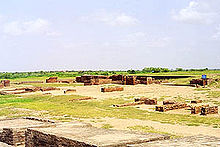
The present day lothal


                                                    For a quick video of lothal click here

Town Planning and Structure

solid waste Filter

  • Lothal engineers engaged themselves to protect the area from consistent floods.
  •  The city was divided into a fortress (citadel) and the the city.
  • The citadel dominated the city which is a bit similar to hariyupa and supposedly the rulers of the city lived in this fortress unlike mohenjo daro which did not have any such distinguishing structure.
  • The fortress had paved baths, underground and surface drains too.

  • The city was divided into two parts
  1. Market place where the traders used to gather to sell various goods
  2. The residential area- The town was divided into blocks of approx 2 metre-high (approx 6 ft) platforms of kiln baked and dried bricks, each consisting of 20–30 houses of thick mud and brick walls.

                                                            The Dockyard!

Lothal during the early days of excavation
  • Welcome! You are looking at the supposedly oldest port of the world! 
  • The dockyard was located away from the main river to avoid deposition of silt. 
  • Modern oceanographers have observed that the Harappans must have possessed great knowledge relating to tides in order to build such a dock on the ever-shifting course of the Sabarmati, as well as exemplary hydrography and maritime engineering. 
  • This was the earliest known dock found in the world, equipped to berth and service ships.
  •  It is speculated that Lothal engineers studied tidal movements, and their effects on brick-built structures, since the walls are of kiln-burnt bricks. 
  • This knowledge also enabled them to select Lothal's location in the first place, as the Gulf of Khambhat has the highest tidal strength and ships can be sluiced through flow tides in the river tributaries or creeks.
  • The engineers built a trapezoidal structure, with north-south arms of average 21.8 metres (71.5 ft), and east-west arms of 37 metres (121 ft).
  •  Another assessment is that the basin could have served as an irrigation tank, for the estimated original dimensions of the "dock" are not large enough, by modern standards, to house ships and conduct much traffic.
  • This is absolutely brilliant! Such technology and perfection 4000 years ago!
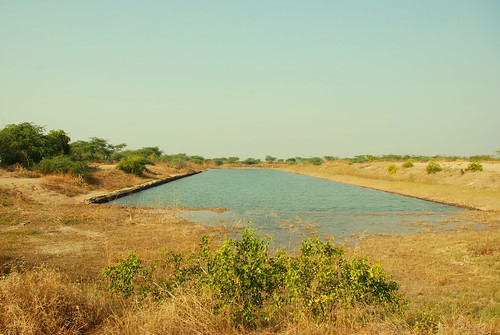
present day lothal
  • The original height of the embankments was (13.98 ft). (Now it is 10.98 feet).
  •  To counter the thrust of water, offsets were provided on the outer wall faces.
  •  When the river changed its course in 2000 BCE, a smaller inlet, 7 metres (23 ft) wide was made in the longer arm, connected to the river by a 2 kilometre channel.
  • At high tide a flow of 2.1–2.4 metres (6.9–7.9 ft) of water would have allowed ships to enter.
  •  The dock also possessed a lock-gate system—a wooden door could be lowered at the mouth of the outlet to retain a minimum column of water in the basin so as to ensure flotation at low tides.
  •  Brick-paved passages between blocks served as vents, and a direct ramp led to the dock to facilitate loading. 
  • The warehouse was located close to the fortress, to allow tight supervision by ruling authorities.
  •  Despite elaborate precautions, the major floods that brought the city's decline destroyed all but twelve blocks, which became the makeshift storehouse.

Business!

  • All of you must be wondering about what the whole trade was about that made lothal stand out from the other cities!
  • Lothal is again one of those towns of hariyupan civilization which made artifacts of pure copper. These artifacts still exist and have stood the test of time!
  • Lothal was the contributor of maximum artifacts of Hariyupan civilization.
copper seal which is also used in indian navy

  • There exists a bead factory, which performs a very important economic function, possesses a central courtyard and eleven rooms, a store and a guardhouse even today. 
  • There is a cinder dump (a site for dumping industrial wastage), as well as a double-chambered circular kiln, with stoke-holes for fuel supply. 
  • The mud plaster of the floors and walls are vitrified owing to intense heat during work. 
  • The residues of raw materials such as reed, cow dung, sawdust are found, giving archaeologists hints of how the kiln was operated.
the marketplace

  •  A large mud-brick building faces the factory, and its significance is noted by its plan.
  •  Four large rooms and a hall, with an overall measurement of 17.1 × 12.8 metres (56 × 42 ft). The hall has a large doorway and a raised floor in the southern corner of the building.
  • This gives us an idea of how advanced the people were in planning and had also built fully operating factories!
  • There are multiple two-roomed shops and workplaces of coppersmiths and blacksmiths in the marketplace.

Artifacts 

  • A unique seal found here is from Bahrain—circular, with image of a dragon flanked by jumping gazelles.
  • The discovery of etched carnelian beads and non-etched barrel beads in Kish and Ur (modern Iraq), Jalalabad (Afghanistan) and Susa (Iran) attest to the popularity of the Indus bead industry across West Arabia.
unicorn seal-2500s B.C.E

  • The Lothal excavation yielded 213 seals, third largest among all Indus Civilization sites.
  •  Seal-cutters preferred short-horned bulls, mountain goats, tigers and composite animals like the elephant-bull for engravings.
SOME INTERESTING FACTS:
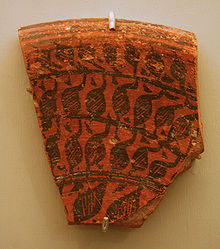
  • Lothal offers two new types of potter work, a bowl with or without handle, and a small jar with design not found in other Indus Valley cultures.
  • Lothal artists introduced a new form of realistic painting.
  • Paintings depict animals in their natural surroundings. On one large vessel, the artist depicts birds with fish in their beaks, resting in a tree, while a fox-like animal stands below. This scene bears resemblance to the story of The Fox and the Crow in the Panchatantra.
  • On a miniature jar, the story of the thirsty crow and deer is depicted – of how the deer could not drink from the narrow-mouth of the jar, while the crow succeeded by dropping stones in the jar. The features of the animals are clear and graceful.
  • A complete set of terra-cotta gamesmen, has been found in Lothal—animal figures, pyramids with ivory handles and castle-like objects (similar to the chess set of Queen Hatshepsut in Egypt)

Defence tools

  • Lothal copper is unusually pure, lacking the arsenic typically used by coppersmiths across the rest of the Indus valley. 
  • The city imported ingots from probable sources in the Arabian peninsula. 
a chisel head

  • Workers mixed tin with copper for the manufacture of arrowheads, fishhooks, chisels, bangles, rings, drills and spearheads, although weapon manufacturing was minor.
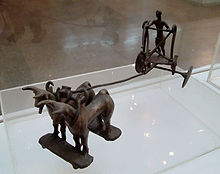
  • They also employed advanced metallurgy in following the cire perdue technique of casting, and used more than one-piece moulds for casting birds and animals.
  •  They also invented new tools such as curved saws and twisted drills unknown to other civilisations at the time.

Another Surprising Fact (Source Wikipedia)!

  • A thick ring-like shell object found with four slits each in two margins served as a compass to measure angles on plane surfaces or in the horizon in multiples of 40 degrees, up to 360 degrees. 
  • Such shell instruments were probably invented to measure 8–12 whole sections of the horizon and sky, explaining the slits on the lower and upper margins. 
  • Archaeologists consider this as evidence that the Lothal experts had achieved something 2,000 years before the Greeks: an 8–12 fold division of horizon and sky, as well as an instrument for measuring angles and perhaps the position of stars, and for navigation.
  • Lothal contributes one of three measurement scales that are integrated and linear (others found in Harappa and Mohenjodaro). 
  • An ivory scale from Lothal has the smallest-known decimal divisions in Indus civilisation. The distance between graduation lines being 1.70 mm.
  •  The sum total of ten graduations from Lothal is approximate to the angula in the Arthashastra (Chanakya's political treatise).
  • The Lothal craftsmen took care to ensure durability and accuracy of stone weights by blunting edges before polishing.

DECLINE OF LOTHAL:

  • Basic reason for the decline of lothal is supposedly great floods which destroyed the city around 1800 B.C.E and caused a great migration of people from Lothal towards eastern parts of Gujarat along the rivers Narmada and also towards the north-Rajasthan.
  • This generation, archaeologists say was very under developed and illiterate for the most part.

SALIENT FEATURES:

  • Lothal is supposedly the world's first dock
  • Lothal is one of the Indus Valley Civilization's most flourishing cities.
  • Along with the usual perfectly coordinated drainage systems and sewer management usually seen in a hariyupan city, Lothal also had a desgnated marketplace in the city where traders used to gather to sell their goods.
  • The city also had a fortress at the centre which was the governing body.
  • The people used to trade with countries like Bahrain,Egypt, Mesopotamia, Persia,Africa and other west arabian countries.
  • The dock of lothal was a very indigenously designed dock with perfection and accuracy but constant floods caused the planning body to change the entry points.
  • Lothal people ahd developed a compass which was used for navigation according to the postions of stars in the sky as well as with the help of the horizon.It had graduation in its scale upto a precision of 1.70 mm per one graduation!
  • Lothal people were experts in crafting and there were special places for blacksmiths and coppersmiths in the city and they were excellent traders.
  • Pure Copper artifacs were in great demand in other countries as this quality of copper was available only in Lothal and not even in other hariyupan cities.......also other attacking tools which were maufactured only in Lothal like drills and saws which were carved with precision
  • There was a bead factory in Lothal which are still made in the same way as it was 4000 years ago
  • The various beads had great demand in west arabian countries.
  • Many seals were found indicating the importance of animals and also of the fact that they worshipped the fire god and sea goddesses which is still practised in Gujarat today.

Wednesday, 15 May 2013

Hariyupa (Harappa)


RED 3: INDUS VALLEY CIVILIZATION CONTD... PART 1: CITIES

Hariyupa originally the name of this city seems to have the name from HARI which is a name of Lord Shiva in Hindu Religion.
Another such city in India is Haridwar in Uttar Pradesh state.

(Harappa) Hariyupa
Major Population-(Early Natives, Aryans)
Maximum Population-(15000-23,500 approx)


Lost city of Harappa
  • Harappa is an archaeological site in Punjab, northeast Pakistan, about 24 km (15 mi) west of Sahiwal.
  • The site at Harappa was damaged in 1857 when the engineers were constructing the Lahore-Multan railway, used bricks from the Harappa ruins for track ballast, and found an extremely large number of artifacts.
  • (Psst! Presently the city lies in ruins due to the negligence of Pakistan Govt. and could have been a site proposed for an amusement park if Mr. Ahmed Dani hadn't intervened! )
  •  The bricks discovered were made of red sand, clay, stones and were baked at very high temperature.  
  • Artifacts and clues discovered at Mohenjo-Daro have allowed archaeologists to reconstruct this civilization. 
  • The similarities in plan and construction between Mohenjo-Daro and Harappa indicate that they were part of a unified government with extreme organization.
  • Most of the city layout and plan is similar to Mohenjo Daro. Refer RED 2!
  •  Both cities were constructed of the same type and shape of bricks.
  •  The two cities may have existed simultaneously and their sizes suggest that they served as capitals of their provinces. 
The best thing which I personally like about the Indus Civilization is:
  • Evidence suggests that this civilization did not have social classes.
  •  Remains of palaces or temples in the cities have not been found.
The layout of the city which shows no signs of a distinct palace
  •  It is possible that the Harappans were a peaceful civilization. The cities did contain fortifications and the people used copper and bronze knives, spears, and arrowheads.
  • The Harappan civilization was mainly urban and mercantile.
  •  Inhabitants of the Indus valley traded with Mesopotamia, southern India, Afghanistan, and Persia for gold, silver, copper, and turquoise.
  • The Mesopotamian model of irrigated agriculture was used to take advantage of the fertile grounds along the Indus River. 
  • Earthlinks were built to control the river's annual flooding.
  • Most of the artwork from this civilization was small and used as personal possessions. 
clay vessel along with design
  • They grew cotton and also knew the art of fabric weaving!
  • The first objects unearthed from Harappa and Mohenjo-Daro were small stone seals.  
  • These seals were inscribed with elegant portrayals of real and imagined animals and were marked with the Indus script writing. 
  • The seals could have been used as currency as alleged by many scholars.
seals depicting various animals
seal showing relation of harappans and animals


God of animals-Pashupati found at Harappa
  •  The seals suggest a symbolic or religious intent. 
  • Stone sculptures carved in limestone or alabaster depict a male figure who may have represented a god.
  •  Pottery figures were shaped into humans and animals. 
  • Very few bronze figures have been recovered.

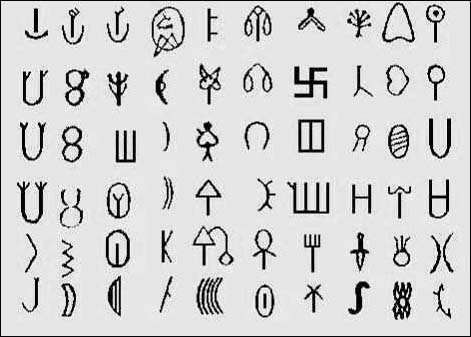
  • Harappans developed the art of writing!
  • Clay tablets unearthed at Harappa, which were carbon dated 3300-3200 B.C., contain trident shaped and plant like markings, and they are suggested as a possible earliest writings anywhere in the world, as opined by Dr. Richard Meadow of Harvard University and Director, Harappa Archeological Research Project
symbols used in INDUS SCRIPT
  • We can observe Indus Script in the various seals unearthed.This script has not been completely decoded yet!


GRADUAL DECLINE:

  • The Harappan civilization experienced its height around 2500 BC and began to decline about 1900 BC. 
  • There are many reasons for its decline.
  •  One theory suggests that the Aryan people migrated into this area. Aryan religious texts and human remains in Mohenjo-Daro suggest that the Aryans may have violently entered the area, killing its inhabitants and burning the cities.
  • This civilization may have begun to decline before the Aryans arrived. The inhabitants of the Indus valley dispersed before the Aryans slowly entered the area as a nomadic people and were then able to take over this area since most of the inhabitants had previously left. 
  • Another cause of the dispersal of the Harappans could have been a result of agricultural problems. Topsoil erosion, depletion of nutrients from the soil, or a change in the course of the Indus River may have forced these people to leave their towns and move northeastward in search of more fertile land.
Here's Where it gets interesting again!
  • Harappa was a cosmopolitan city. Many of the deceased had grown up outside Harappa—the first direct evidence that "individuals were indeed migrating to the city," 
  •  Migrants may have come to Harappa for MARRIAGE!
  •  Many of the outsiders, surprisingly, are men buried near women native to Harappa. 
  • The findings are preliminary, but they suggest men moved in with their brides, even though in South Asia women traditionally move to their husband's homes. would point to a "system where women were powerful."
Burial at Harappa

  • Experts have long thought that the Indus region was indeed vastly different from ancient Egypt and Mesopotamia in one respect: the level of violence.
  •  Based on the lack of evidence for mass destruction of any Indus cities, the Indus is often described as a "peaceful civilization." 
  • But another group of Harappan skeletons tells a darker story! This was covered by The National Geographic channel!
  • Bones from about 1900 to 1700 B.C make it clear that at least some Harappan residents were subjected to savage violence. 
  • The skull of a child between four and six years old was cracked and crushed by blows from a club-like weapon. 
  • An adult woman was beaten so badly—with extreme force, according to researchers—that her skull caved in.
  •  A middle-aged man had a broken nose as well as damage to his forehead inflicted by a sharp-edged, heavy weapon.
A skill of an adult male.
This skull of an adult male shows traces of a broken nose and a blunt-force injury.
Photograph courtesy Gwen Robbins Schug
  • Of the 18 skulls examined from this time period, nearly half showed serious injuries from violence.
  • Is this is a coincidence that during the decline of this civilization violence was running riot?
  • Could it be that Aryans,the founder of Vedas and peaceful living could subject to such cruel violence???
  • The mystery remains unsolved.

 SALIENT FEATURES

  • The similarities in plan and construction between Mohenjo-Daro and Harappa indicate that they were part of a unified government with extreme organization.
  • Both cities were constructed of the same type and shape of bricks.
  • The Harappan civilization was mainly urban and mercantile.
  •  Inhabitants of the Indus valley traded with Mesopotamia, southern India, Afghanistan, and Persia for gold, silver, copper, and turquoise.
  • They grew cotton and also knew the art of fabric weaving!
  • The first objects unearthed from Harappa and Mohenjo-Daro were small stone seals.  
  • These seals were inscribed with elegant portrayals of real and imagined animals and were marked with the Indus script writing. 
  • Women are supposedly the more powerful sex in harappan civilization.
  • The first forms of writing were probably developed by the Harappans!
  • The seals could have been used as currency also.
  • The Aryans could have attacked these cities causing their decline in 1900 B.C.
Stay tuned i will be explaining more about the two gujarat cities lothal and dholavira which were important trade cities and this fabled state is till date assumed the manufacturer of businessmen and businesswomen!

Thursday, 18 April 2013

Mohenjo Daro: RED 2: Indus Valley Civilization contd... Part 1: CITIES

RED 2: Indus Valley Civilization contd... Part 1: CITIES

  • Indus Valley Civilization or Sapt Sindhu civlization had flourished because of its seven primary rivers as i have menitoned in the previous chapter.
  • All the Rivers were responsible for growth of Agriculture, development of cities has been primarily due to the access of rivers and the Arabian Sea.
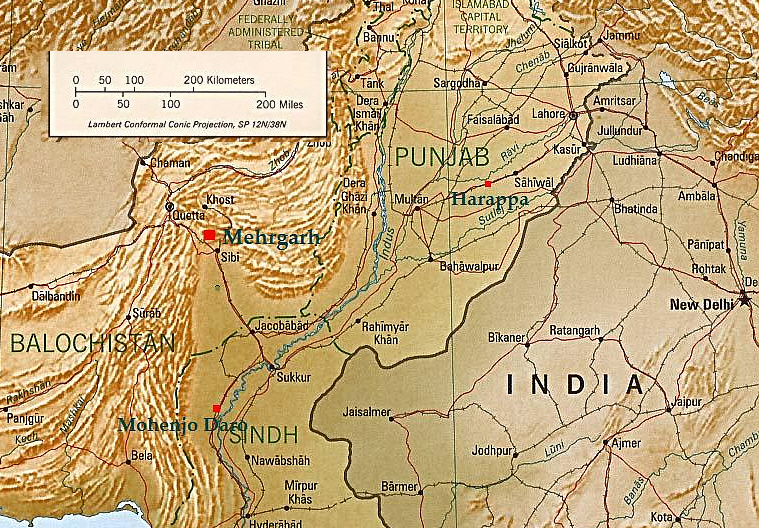
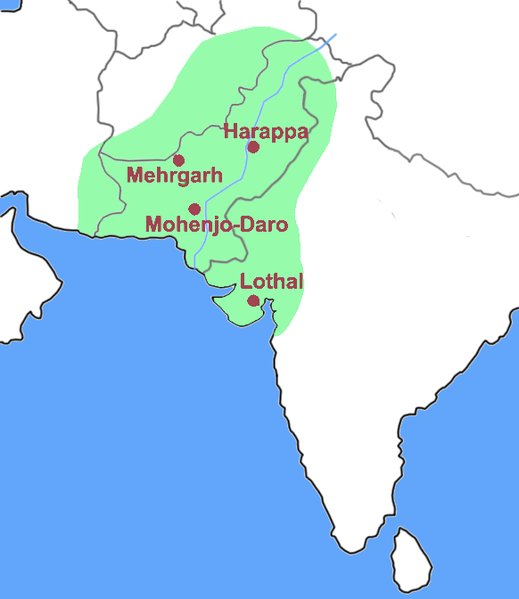
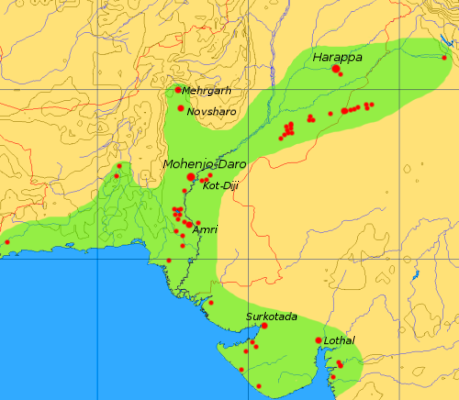
  • Along with settlements found around the Indus and its tributaries, To date, over 1,052 cities and settlements have been found, mainly in the general region of the Sarasvati and Sutlej river and its tributaries. Among the settlements, the major cities were:
  1. Mohenjo Daro ( Sindh Pakistan)
  2. Harappa (North-East Punjab, Pakistan)
  3. Surkotada (Gulf of Kutch, Gujarat, India)
  4. Lothal (Kutch, Gujarat, India)
  5. Kalibangan (Northern Rajasthan, India)
  6. Dholavira (Gulf of  Khambhat, Gujarat, India)
  7. Rakhigarhi (Hisar, Haryana, India )
  • The biggest irony of the above sites is that only Mohenjo Daro and Harappa  were the major cities situated on the Indus river whereas all the rest were situated as Historians claim on a now DRIED UP river which was as big as the Indus and used to flow parallel to it in the East direction.
  • This river is none other than Sarasvati !
  • Lothal is supposedly the closest town/city where Sarasvati river joins the Arabian sea.

Mohenjo Daro

Major Population (Early Natives, Aryans)
Maximum Population (estimated 35,000)

The great city of Mohenjo Daro


  • Located in Sindh,currently Pakistan the name Mohenjo Daro  is a Sindhi name which means 'Mound of the Dead!'
  • It is said to be built around 2600 BCE on the Indus river and was in the same time-frame as Ancient Egypt, Mesopotamia and Crete.
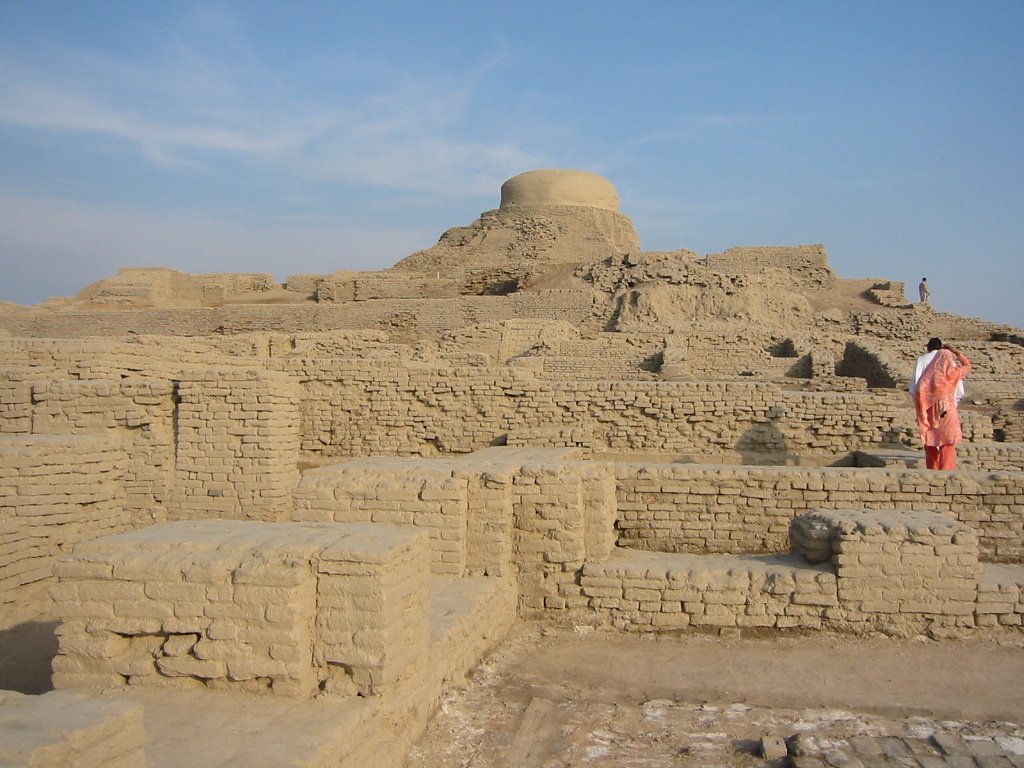
  • It was rediscovered in 1922 by Rakhaldas Bandyopadhyay, an officer of the Archaeological Survey of India,who was led to the mound by a Buddhist monk, who reportedly believed it to be a stupa.
  • The city is divided into two parts, the so-called Citadel and the Lower City
  • The Citadel – a mud-brick mound around 12 metres (39 ft) high – is known to have supported public baths, a large residential structure designed to house 5,000 citizens, and two large assembly halls.
12m x 7m bath at Mohenjo Daro
  • The great bath was believed to be used for sacred religious activities.
  • Mohenjo-daro had a building with an underground furnace (a hypocaust) and dressing rooms, suggesting bathing was done in heated pools, as in modern day Hindu temples.
  • In 1950, Sir Mortimer Wheeler identified one large building in Mohenjo-daro as a "Great Granary". Certain wall-divisions in its massive wooden superstructure appeared to be grain storage-bays, complete with air-ducts to dry the grain.
  • Houses were constructed with manufactured, standardized, baked kiln bricks.
  • Shops lined the main streets of Mohenjo-daro and had a grand marketplace. 
  • Some houses were spacious and with a large enclosed yard.

  •  Each house was connected to a covered drainage system that was more sanitary than other West Asian Civilizations.
  • Many houses were multi-storied and there is also evidence of vertical drainage system for bathrooms on the top floor.
Covered Drains in Mohenjo Daro
  • The people of Mohenjo-daro and Harappa shared a sophisticated system of weights and measures, using an arithmetic with decimals. 
A sitting Priest Terracotta figurine
  • The people of Mohenjo-daro and Harappa manufactured pottery with fine geometric designs as decoration, and they made figurines sensitively depicting their nature and moods.
  • They grew wheat, rice, mustard and sesame seeds, dates and cotton. 
  • And they had dogs, cats, camels, sheep, pigs, goats, water buffaloes, elephants and chickens.
  • Its a strong belief that they were Hindus due to the various seals found in Mohenjo Daro.
  • There is not much proof whether these seals were used as coins but barter system was not that effective and therefore one would belive them to be a form of excahnge.
Shiva Pashupathi Seal
Oxen on a seal
  • The actual city could have looked like this:
  • The city also had several watch towers but they were not heavily walled like other cities in present day India.


Governance

  • The administration was so spot on in Mohenjo Daro as well as Hariyupa that makes us think about the rule in these cities.
  • It is believed that there were various tribes with a tribal leader and it was a male dominated society unlike Egypt.
  • They also warred with non-Aryan folks for pasture lands.
  • The finesse with which the city is built gives us an idea of their engineering capabilities. 

Decline of Mohenjo Daro 


  • The city was found in 7 layers which indicates that it was rebuilt 7 times mostly due to the flooding of the Indus River.
  • Between 1800 and 1700 BCE, civilization on the Indus Plain all but vanished.. One suspected cause is a shift in the Indus River. Another is that people dammed the water along the lower portion of the Indus River without realizing the consequences: temporary but ruinous flooding up river, flooding that would explain the thick layers of silt thirty feet above the level of the river at the site of Mohenjo-daro. 
  • Another suspected cause is a decline in rainfall.Agriculture declined and people abandoned the cities in search of food.
Present Day Mohenjo Daro

  • Knowledge of the Mohenjo-daro and Harappa civilization died – until archaeologists discovered the civilization in the mid-19th century.
  • At present the excavation has been stopped due to negligence and erosion of the excavated remains.

SALIENT FEATURES:

  1. The city is divided into two parts, the so-called Citadel and the Lower City.
  2.  The Citadel – a mud-brick mound around 12 metres (39 ft) high – is known to have supported public baths, a large residential structure designed to house 5,000 citizens, and two large assembly halls.
  3. The huge 12m x 7m bath at Mohenjo Daro was believed to be used for sacred religious activities which was equipped with a Heating System.
  4. Shops lined the main streets of Mohenjo-daro and had a grand marketplace. 
  5.  Each house was connected to a covered drainage system and many houses were multi-storied and there is also evidence of vertical drainage system for bathrooms on the top floor.
  6. The people of Mohenjo-daro and Harappa manufactured pottery with fine geometric designs as decoration, and they made figurines suggesting their prowess in ARTS and SCIENCE.
  7. Its a strong belief that they were Hindus due to the various seals found in Mohenjo Daro.
  8. They grew wheat, rice, mustard and sesame seeds, dates and cotton. 
  9. And they had dogs, cats, camels, sheep, pigs, goats, water buffaloes, elephants and chickens.
  10. Between 1800 and 1700 BCE, civilization on the Indus Plain vanished.


Tuesday, 9 April 2013

Mehrgarh Civilization

RED 1:

Mehrgarh Civilization- Currently Balochistan, Pakistan.


Mehrgarh is located near the Bolan Pass, to the west of the Indus River valley and between the now Pakistani cities of Quetta, Kalat and Sibi i.e. almost 30 km from Sibi and could have been established on the present Bolan River which is close to drying up.

Before we learn more about the Mehrgarh civilization I would like you all to know some of the technicalities used in Archaeological circles.

A short summary of the period of ages:


  1. Stone age: Earliest era of human existence, people used artifacts made of stones.Its the period before 10,200 B.C.E
  2. Neolithic Age: Known as the New Stone Age, it was the last part of the Stone age and dated between the years 10200 BCE- 4500 BCE.
  3. Chalcolithic Age: Known as the Copper Age which is said to be the first metal age, which is also included in the Bronze Age. Mostly found artifacts date it back to the period 5000-4000 BCE till 700 BCE.
  4. Bronze Age:Bronze is an alloy made from Copper and Zinc/Tin. Mostly the time period between 3000 BCE - 1000 BCE which include the Rig Vedic period.
  5. Iron Age: The last part of the Indus Valley civilization which includes the era 1200 BCE - 26 BCE as far as India is considered.

Mehrgarh Civilization:

   Major Language: Unknown

     Major population: Native Indians (25,000)


Excavated Mehrgarh village. approx 7000 BCE

  • Mehrgarh was discovered and excavations begun by a French team led by Jean-François Jarrige; the site was excavated continuously between 1974 and 1986.
  • Early evidence has been found suggesting that a Civilization existed in Mehrgarh as early as 7000 BCE which is 3500 years before the Indus Civilization!
  • Mehrgarh is supposedly the most sophisticated, ingenuous and best planned ancient farm villages of ancient India.
  •  One amazing bit of info about this town is that in 7000 BC it had a population of 25000 people, which was the number of people living in the entire Egypt in 7000 BCE

Earlier influence and advancement in science and arts

  • Lot of influence in History has always been on Egypt and Turkey during the period 7000 BCE, but Mehrgarh was far advanced than both of them!
  • Grains as old as 12000 years have been found in Jericho, Palestine but there is no instance of civilization as early as 4000 BCE! For more information on Jericho click here
  • There are mud brick houses and also granaries have been found!
  • The most unique discovery is the first known origin of the dental surgery and related medicinal activities exercised in Mehrgarh area. The discovery proves the great innovative mind and developmental level of those people about 9000 years ago.
  • Now here it gets interesting ( IN DETAIL ):
  • According to a report in the April 6, 2006 issue of Nature, Italian researchers working at a cemetery site in the Neolithic town of Mehrgarh discovered drill holes on at least eleven molars from people buried in the cemetery.
  •  Light microscopy showed the holes were conical, cylindrical or trapezoidal in shape.
  •  A few had concentric rings showing drill bit marks; and a few had some evidence for decay. No filling material was noted; but tooth wear on the drill marks indicate that each of these individuals continued to live on after the drilling was completed.
Drilled, maxillary left second molar from an adult male in neolithic Mehrgarh
(Museum L.Pigorini , ROME)
  •  Dental caries (or cavities) are the result of sugars and starches in the food we eat. Hunter-gatherers, who rely on animal protein, do not generally have cavities; cavities associated with the use of roots and tubers, or starchy grains.
  • Researchers point out that only four of the eleven teeth contained clear evidence of decay associated with drilling; however, the drilled teeth are restricted to molars in the back of both lower and upper jaws, and thus are not likely to have been done for decorative purposes. 
  • Flint drill bits are known from Mehrgarh, long associated with the bead industry there. The researchers conducted experiments and discovered that using a flint drill bit attached to a bow-drill, it required under a minute to produce similar holes in human enamel.

A figurine from Mehrgarh, 3000 BCE. (Musée Guimet, Paris)
  • The oldest ceramic figurines in South Asia were found at Mehrgarh. They occur in all phases of the settlement and were prevalent even before pottery appears!
  • No other civilization in any other part of the world existed then; what to speak of a level of perfection in the art and craft elsewhere.
  • Mostly figurines of terracotta and clay have been found along with those of stone mostly consisting of females which points to deities related to fertility rites and male figurines were also found with turbans on the heads!
  • People in this part of Pakistan still wear turbans and the total amount of figurines unearthed were over 32,000!

Lifestyle and Decline of Mehrgarh Civilization

  • There is evidence that people in Mehrgarh used to cultivate Wheat, Rice and Barley where Rice was the staple diet.
  • They also had cattle comprising of goats and sheep. They also had the techniques for fishing.
  • The first use of cotton in the history of mankind has been found at Mehrgarh.
  • It leaves archaeologists stunned that Mehrgarh natives also knew Fabric Weaving!!
  • The people were buried unlike in the Hindu custom where the bodies are burnt which is also interesting.
  • The people were buried along with pitchers and ornaments, a custom which was also observed in Egypt!
  • At the height of civilization it covered over 200 hectares or 2 square km for 25000 people!
  • During the period 2500 BCE - 2000 BCE there has been a migration towards Harappa and Mohen-jo-daro and also to Nausharo which is 6 km south of Mehrgarh in the wake of Indus Valley Civilization!

SALIENT FEATURES OF MEHRGARH CIVILIZATION (SUMMARY)

  • One amazing bit of info about this town is that in 7000 BC it had a population of 25000 people, which was the number of people living in the entire Egypt in 7000 BCE. 
  • There are mud brick houses and also granaries in Mehrgarh as early as 7000 BCE.
  • Mehrgarhians as I call them were experts in medical and dental fields and had found a cure to dental caries and could effectively remove cavities!
  • The oldest ceramic figurines in South Asia were found at Mehrgarh.
  • Mostly figurines of terracotta and clay have been found along with those of stone mostly consisting of females which points to deities related to fertility rites and male figurines were also found with turbans on the heads! Total amount of figurines unearthed were over 32,000!
  • The first use of cotton in the history of mankind has been found at Mehrgarh.
  • Mehrgarhians also knew how to weave fabric and wore it as a cloth.
  • Mehrgarh stretched over 2 square kms for 25000 people!
  • Mehrgarhians buried their dead with items such as pitchers and ornaments.
  • The city died after the SAPT SINDHU CIVLIZATION reached its peak during the period 2500 BCE- 2000 BCE.

Monday, 8 April 2013

TWO PARTS OF INDIAN HISTORY


  TWO PARTS OF INDIAN HISTORY.


  1. Well, the basic landmark that became known to the entire world as the Aryan Indian era will be considered as a benchmark by me for further events wherein I will consider events that occurred before Mauryan Civilization and parallel kingdoms.
  2. Many YouTube videos which I consider interesting myself and also many amazing Articles I will be sharing with you all in the section of my blog called  pages.
  3. So further on, those who would like to know more about the events after the Mauryan era please proceed in the Gold Series.
  4. Whereas those would like to know the occurrence of events before Mauryan era please proceed in the Red Series.
  5. I will also include SALIENT FEATURES at the end of each post if you haven;t got the time to read the whole post!  
  6. I will make a sincere effort to post one topic every week and make my best effort to make it as. Interesting as possible!
  7. Your feedback is very very important!!!
  8. Please don't forget to comment.

Friday, 29 March 2013

SAPT SINDHU CIVILIZATION

There are various phases of Indian Civilization. Indian Civilization is considered to be one of the first civilizations of the world.

Major Language : Sanskrit

Major Population: Aryans (approx 50,00,000+)


The Himalayas which were considered young among the many mountain ranges, grew every year and was the lifeline of Indian Civilization.

SAPT-SINDHU (7 Rivers)

Indian Civilization flourished in:

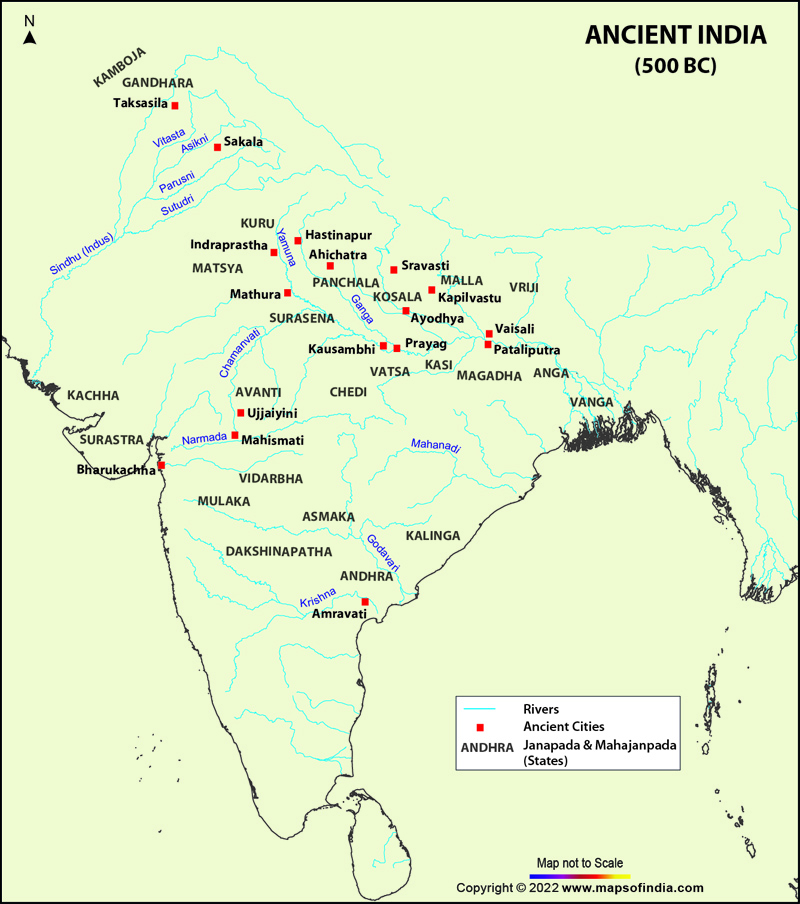
  • The present states of Punjab in pakistan and India due to the abundance of perennial rivers of which the most important river was Sindhu (presently called Indus from which 'India' derives its name)
  • Seven major Indian rivers as seen in the north-western part of India known as the Sapt-Sindhu (7 rivers) including:
  1. Jhelum ( Sanskrit name: Vitasta)  for more info on Jhelum river click here.
  2. Chenab (Sanskrit name: Asikni) for more info on Chenab river click here.
  3. Sarasvati (later dried up and recently no longer exists) for more info on Sarasvati river click here. (I shall later dedicate a whole chapter to this river)
  4. Ravi ( Sanskrit name: Iravati or Airavati) for more info on Ravi river click here.
  5. Sutlej (Sanskrit nameShatadru or Suṭudri) for more info on Sutlej river click here.
  6. Beas (Sanskrit name: Vyas for more info on Beas river click here.
  7. Indus (Sanskrit name: Sindhufor more info on Indus river click here.


The part where I want to focus is the steady rise and prosperity of the Sapt Sindhu civilization more commonly known as Indus Valley Civilization; and the various archaeological finds related to this civilization.


The above pic shows the SAPT SINDHU (INDUS VALLEY) CIVILIZATION.


     This picture shows the two kingdoms of Greek-Iran during the period 4th century BC to 2nd century AD

  • Aryans or Arians as a matter of act were believed to be the original citizens of Iran. Archaic Iran was known as Persia and was considered to cover present day Afghanistan, Iraq, Iran, Georgia, Balkan nations and many middle eastern nations.
  • The kingdom of Parthia in the above picture defines the Iranian influence which had major Zoroasterians and worshipped the Sun, which could also be an Egyptian influence as suggested in many archaeological finds.
  • Whereas the Scythians were inhabited by nomadic Iranian tribes before being captured by the Greeks thereby naming it Scythia.
  • Thus, plainly put, History suggests that Scythians and Parthians had a major population of Ariyas.
  • Aryans in India spoke Sanskrit whereas Scythians spoke Greek and Formerly Latin both of which have close ties with the Sanskrit language.
           This picture of the 500 BCE era shows the Iranian supremacy in middle east and Europe
  • 'Arya' in Sanskrit means a noble person whereas in Iranian scriptures Arian meant 'venerable'. Both of them coincide in their understanding of Aryans was an honourable man.